Monday, 11 October 2010

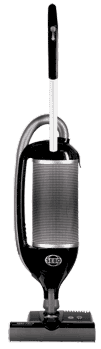
Sebo Felix Pet, my new vacuum cleaner


I hate housework, I have to admit but my new Sebo has been the best vacuum cleaner I have ever bought.

Having two dogs and four cats means the carpets get, er, matted, which is why the Sebo Felix Pet was such a great choice. The attachment head for stairs and pet hairs actually works, unlike those on previous cleaners which clog up and leave the brush unable to rotate. Even though the cable is shorter than I am used to and I have to stop half way down the stairs, carry the Sebo down and then start again from the bottom, it is still quicker and more efficient than previous rivals.

Its black and silver colour and racing car styling appeal to my 16 year-old son, who now quite often takes it upon himself to clean the living room carpet. Admittedly, it was he who dropped my now deceased old pet vac down the stairs within weeks of purchase. It spent virtually the entirety of its short life stuck together with brown parcel tape. It was after he accidentally threw away the cyclone filter that it sucked its last.


The great edge cleaning means it is not always necessary to use the crevice tool to clean along the skirting board. The head swivels to make cleaning around furniture really quick and easy but it has to be tried to be fully appreciated and the removable bags last for ages. I was very sceptical when the shop assistants told me this because the replacements are quite costly. However, even with as many furry friends as we have, the bag has only been replaced twice and I suspect the second time was my son's overkeeness.

My Sebo came with a detachable head for hard floors and a box of powder carpet stain remover. The only downside to this fabulous piece of German engineering is the lack of either onboard storage space for the additional heads or something to put them in.

Although it is more expensive than others on the market, it is lighter, more efficient, takes up less space and is wonderful to use. The side carrying handle makes it easy to take upstairs so, hopefully, my new Sebo Felix Pet won't suffer the fate of the last vacuum cleaner.

Tuesday, 17 August 2010

Supporting Statement I read at my interview.

I have written this in case my responses to your questions become lost in my labyrinthine, autistic, rainbow head.

You say the NAS actively encourages people with autism to apply to work for them. It is my sincere hope you will seriously consider my application today. You will never regret it. I have a great deal of understanding and compassion for those on the autistic spectrum. I promise you today that my commitment will be both to your amazing organisation and those you seek to serve.

I am an individual with the strength of character, integrity and tenacity to overcome the kind of hurdles and prejudices, personal difficulties and misunderstanding that nobody should have to live with. I am not the kind of person to go the extra mile, but one who will go as many miles as it takes to achieve a satisfactory outcome.

Being a university student opened many doors for me. One of the most memorable was attending the National Autistic Society 2008 International Conference. It showed me the direction my life and career should be taking, which is to work with and for the National Autistic Society. Only one of the main stage speakers, Stephen Shore, was on the autism spectrum. I would like to add to that number. To steal one of your campaign titles, don’t write me off. To steal another one, I exist. But, you know, I’m going to do more than exist, I’m going to go out and win.

Five years ago, it was the NAS website and helpline which enabled me to self diagnose my Asperger’s syndrome. It gave me the tools to approach my doctor for a formal diagnosis but, more than anything, it gave something for me to approach my youngest son’s school with. Autism runs in families, as you know, and Martin was no longer either just a naughty boy or the product of inadequate parenting. Even though Bruno Bettelheim’s ‘refrigerator mother’ theory has long been discredited, misunderstanding, ignorance and prejudice still exist. I cannot imagine anything more rewarding than working with the National Autistic Society, to raise autism awareness in society and empower my own people to achieve dignity, respect, admiration, employment, education, successful relationships and the brightest of futures.

The NAS has run some remarkable campaigns, one of which gave rise to the Autism Act, while your current campaign, You Need to Know, is fantastic but perhaps could have included adults with autistic spectrum conditions. Mental health problems do not go away with age and sometimes they can be compounded by late diagnosis and the frustration of trying to communicate with a world that does not understand or whose preconceptions fail to recognise that difference is okay.

Looking ahead, it would be wonderful to see the National Autistic Society run a campaign called If I can, You Can, led by people on the autism spectrum, for people on the autism spectrum. Why? To enable spectrumites who have achieved, to inspire those who want to but may be unsure where to start. It would help parents realise their autistic children can do so much, can live independently and enhance the communities in which they live.

If you appoint me to the position of University Support Mentor, I hope my example and inspiration will communicate just this: If I can, You Can.

Saturday, 1 May 2010

Does it make you want to read the essay?


It was Shabbat and I was trying to sleep. My applied project had been a work in progress forever, it seemed and I was determined not to tweak it anymore. I had had been looking over my personal reflection until late the night before, sculpting and shaping it, still not understanding what it was supposed to actually do. I got up and made a large glass of detox tea and stood in my sunny garden. Whilst trying to dig out bits of stuck breakfast, superfood seed mix, from between my teeth, the Eureka moment hit me; an instant of, ‘By jove, she’s got it.’

Why had nobody actually explained that a personal reflection is the same as the preface to a book? The forward? The introduction? The frustration, married with relief at finally having the penny drop made me decide to rewrite the whole bloody lot. It was 8.45 in the morning and I had ninety minutes to bung a few thoughts down before picking Nick up and spending the rest of the morning in synagogue. There was an element of moral responsibility and I wondered if I should email all the students who had agonised over theirs and had borrowed my last one and excitedly tell them, ‘It’s an intro, guys.’

Let me preface my essay

Using my dad as the subject of this assignment should have been easy but it has been an angry lion to wrestle in the darkness with. Sometimes it felt as though something had crawled into my heart and died. At other times, memories like the warm smile of sunshine stroked my cheeks.

It has been a reflection on my life and how it has interwoven with that of my dad. I wrote what I hoped would be an honest tribute to victory over his demons.
My father was reborn, to become the high as a mountain and wide as the sky dad I remembered as a child. He was going to sell a book and I was going to be leather jacketed, a motorcycling, journalist bombing around, digging up fantastic stories.

In December last year, I was in an Oxford pub, the Lamb and Child with author Philip Pullman, discussing books and how he wrote. I asked if he’d ever considered writing an autobiography, as his right to reply to his critics. No, if he wrote anything like that, he told me, it would be more in the form of a memoir. He suggested I write a book but my response was I would not want it to look like misery lit. ‘Then make it happy lit,’ he’d said.

If this essay is to be considered as one chapter in a book, I would like it to be seen as balanced lit. Honest, candid and worthy of both tears and laughter. That would be a very accurate memoir. I hope not to have evoked any feelings in the reader of bitterness and anger towards my dad because that would be false. I have nothing but admiration for a man who has turned into a role model of mountainous proportion.

I write about having two dads and this is often how children of addicts describe their suffering parent, whose torment ripples across the whole family and often to the community and wider society. One person can cause so much devastation for so many.

I remember the terrified child, frightened and crying, held hostage in the kitchen by the night time dad with his flailing arms and drunken rants of how the world would end when Russia went to nuclear war with America.

I remember line of one of my favourite songs, Bridge Over Troubled Water, written by Paul Simon:

Sail on silver girl, sail on by. Your time has come to shine. All your dreams on their way. See how they shine.

And I hope they will.

They bring me to another junction, where, in my mind, I check my map and look up. There is a mountain enveloped in clouds of uncertainty and incredible adventure. I look down, over an eye wetting landscape of both beauty and trauma. Treetops, valleys, lakes; the sea in the distance, reflecting the sun; cattle grazing and lambs, playing Batman or Power Rangers. I wish I could print photographs of those pictures. Maybe that is something far higher up, where the sky is always wilder than motorbikes, leather jackets, journalistic aspirations and innocent, childish dreams.

References
Page, R. The Presence a memoir of miracles. 2010. O Books, Ropley, Hants.
http://www.alcoholics-anonymous.org.uk/
http://alcoholism.about.com
http://www.apas.org.uk/index.htm
http://www.drinkaware.co.uk/
Thursday, 22 April 2010

Country diary of an Edwardian Lady meets the 21st Century


I was trying to explain to my dad how the university system works in England, through the eyes of a mature and autistic student. Some knowledge of the names given to pre-decimal coinage would help. Here is an extract from the email I sent.

-------------------------

Now for the lesson in how higher education works in 2010. Nobody, by the way, gives you a glossary of terms. They must either assume you know or you'll have to work it out for yourself.

Module: in old money is a subject or topic. Whilst my degree is BA (Hons) Journalism Studies, we have different modules to complete within it. Some are elective and others mandatory. (I don't think I have to explain the difference to you).

Semester: American (shudder) for academic term.

We have three modules (subjects) each semester (term). For me, at the moment, it is 1- applied project* or dissertation (I still don't know what one of those is) which is mandatory. 2- Journalism Professional Practices. Mandatory. 3- Sexuality and Culture. Elective.

*My applied project is you, dad.

The JPP is a horrible, autism hostile, module I would never have chosen because the unwritten rules are endless.

My one elective module is Sexuality and Culture. How this relates at all to journalistic anything escapes me but going to uni on Friday afternoons and talking about sex is actually quite a refreshing change. Just when you think you have been there and done that so many times you wish you had bought the t-shirt factory, rethink. Experience tells you to hide your hands in your armpits when you really want to throw at least one in the air and say, 'Miss? Miss? What's rimming, miss?' And dominatrix? Well, I used to love the double five. That was my favourite. Oh, sorry, I was thinking dominoes. Must be getting old. Do you think shove ha'penny means something rude these days? I mean, you can't say 'pussy' without setting a 13 year-old off laughing. As if anyone these days knows what an ha'penny is. I dread to think what they'd do with a tanner. Old money; old people; And there was this girl who said one of those deeply meaningful things that began with well, twenty years ago.... and I missed the rest of it because inside I was falling over laughing. How did we forget that sex was invented by teenagers and copulation is the number of policemen down at the local nick?

As for home study. You could call it research or homework that nobody sets but our written work is telling on how much we have done. In my case, not necessarily very much. There is something of an art to producing a piece of work which ticks all the boxes but is just outside of the experience of the marker. For instance, last year, I did a piece for the module called 'Investigation and Research Skills' and missed out loads of quite important information because our module leader (teacher) had never been to an Alcoholics Anonymous meeting. It comes in handy, being old. You realise that grown-ups don't know everything and a lot of the others still look at the module and course leaders as grown-ups, somehow bigger than they are. They are like puppies, trying to sound profound, eager to please. My advantage is in being more mercenary now. I ask what gets marks and have taught the relevant few how to break down information into comprehensible bullet points. The dog has taught its master how to bark.

Plagiarism is something of a media panic. It is far harder to achieve than most people outside of univeristies think and has been going on since Adam were a lad. There are computer programs which essays can be run through that throw alerts up when something looks as though it has been copied and pasted from a website. There must have been youngsters copying, long hand, huge chunks of stuff they fished out of text books ever since Gutenberg created the printing press. Just as youth insists it invented sex, so its impudence assumes the ignorance of the old.

But I still laughed behind my hand when I read the word crap in a recent edition of The Oldie.

I'll get back to my essay now.

Image courtesy of www.cartoonstock.com

Saturday, 10 April 2010

Personal reflection on my Final Year project piece


Dave, who I mention in the piece, is my supervisor and has been just brilliant. I had been at home, absorbed in learning an extract of the Kaddish in Hebrew when I received an email from our course leader, Sue, saying I had not submitted the personal reflection or a CV I needed for this module. Yet they gave me a chance to write one and get in by Monday. This was Friday lunchtime and I work all weekend. The task looked and felt impossible. I threw this together on the train from Long Eaton to Sheffield and back and got my best ever mark for it (78%). Here it is, in full.

..................

In his poem Buttercup Days, AAMilne wrote:

What has she got in that little brown head?
Wonderful thoughts which can never be said...


This is probably the best appraisal of an autistic mind I have come across. Succinct and unambiguous.

My original idea had been to write about aliens and autism and life on the periphery of society; to discover whether or not there could be anything to substantiate the belief of some people that aliens have visited earth and deposited various offspring among the human populace.

Following a much anxiety and procrastination, Dave and I decided my project would be on Obsessive Compulsive Disorder and Asperger’s syndrome. His suggestion was, in fact, Gary McKinnnon but we thought it a good idea to widen it. It was a traumatic personal journey which uncovered even more aspects of a difficult life to acknowledge.

My intention, in consultation with my supervisor, was to write a balance of first hand insights with other printed material, which I felt I achieved without becoming self indulgent. The outtakes were fairly epic in proportion to the submitted piece but there is an awful lot to filter in my ‘little brown head’.

Living in a foreign culture and speaking an alien tongue is pretty hard going but what I have most of all hoped for is that one, elusive, piece of work; that wonderful window through which everyone will suddenly be able to see and understand an autistic mind in all its rainbow glory.

Gary McKinnon epitomises everyone’s dread of being left stranded, abandoned and misunderstood. Up Shit Creek without a paddle, to use a vernacular expression. Simon Baron-Cohen threw a life line, recognising McKinnon’s autistic traits during a television interview and he has been doing his utmost to help this man since. So have many other people but those of us care about individuals and their right to be heard and understood can only sign petitions, write to Members of Parliament, and hope.

I tried to explain the reason behind autistic ‘strong interests’ and how they can become obsessive. This does not necessarily mean OCD, which I discovered during my research. It seems to be whatever is going on in little brown autistic heads that turns obsession into obsessive compulsive disorder. Egodystonic thoughts, as Tony Attwood called them. It hardly expresses the terror and rigid fear these not-so-wonderful thoughts bring with them. Even though my mentor quite liked what I’d written and a friend complimented it when I put it on my blog; even when I submitted a pitch to Communication, the magazine of the National Autistic Society and they expressed an interest in publishing it, I felt I had ‘bombed’. Nothing seemed to adequately capture and tame that wild firework display of thoughts and emotions.
Then to go through the trauma of checking, rechecking, sweating, crying and swearing over it, it was handed in. But I was so focused on the piece of work itself I either forgot or did not notice the personal reflection and CV, which also needed to be completed and handed in. Very fortunately, the teaching staff gave me the chance to write and submit it, which is where I am now, clutching at oars from the man in Shit Creek Paddle Store. Crying all over again at the two fighting factions in my head. One is the voice of my mother, whose blazing furnace of a mouth was telling me I’m no good and will never amount to anything. The other fights that furious, angry, fire with water, an ocean of affirmation that allows us to stuff up and yet be given a chance.

This is why I understand Gary McKinnon. His raging obsession burned so hard and furious he was incapable of seeing all those other really important issues surrounding his hunt for alien life and free energy.

Maybe Gary McKinnon’s mute shout will be heard and he will be freed.

One day, perhaps, those ‘wonderful thoughts’ of Buttercup Days, which are locked inside the glass wall of my mind, separating our worlds, will find a window and be adequately able to communicate.